Submit Enquiry
×

    Book Your Tour

    6 Ihram Rules Every Muslim Pilgrim Must Follow

    ihram

    The process of getting ready to Hajj or Umrah is one of the most important spiritual experiences in the life of Muslims. Out of numerous prescriptions involved during the conduct of these sacred pilgrimages it is incumbent upon anyone undertaking these pilgrimages to have a clear knowledge and subsequently abide by the rules of the Ihram, as it is one of the fundamental duties any pilgrim should be well versed with before leaving to visit the holy cities of Mecca and Medina.

    Wearing certain clothes in the Ihram does not only symbolize a state of spiritual purity, devotion, but it also represents the fact that every believer becomes a pilgrim, who is devoted to worship. This sanctified state demands firm compliance with certain rules and regulations that Muslims have been following since 1, 400 years, through which current pilgrims can relate themselves to the heritage left by Prophet Muhammad (peace be upon him).

    Be it your first pilgrimage or your second since many years ago, the list of things one must not do whilst in ihram will be the key to an enjoyable faith experience or a potentially spiritually painful time of uncertainties surrounding religious duties. Crowne Travel has facilitated numerous pilgrims in these sacred pilgrimages and through experience we have learned that before we commence on the pilgrimage we need to prepare ourselves to receive a meaningful pilgrimage by understanding the ihram restrictions.

    The six ihram laws included in this guide will guide you through your ihram state with a sense of control and make sure that you are allowed to concentrate on the religious rituals instead of worrying about unintentional improper performance. By gaining the insights about these prohibitions, pilgrims are able to appreciate the transformative power of ihram as long as reverence and respect are taken seriously to the holy journeys demanded.

    Understanding the Sacred State of Ihram

    Prior to discussing certain prohibitions, pilgrims need to know that ihram is transitional spiritual consecration. This state starts when pilgrims perform their niyyah or intention of undertaking Hajj or Umrah and putting on the prescribed outfits by the boundaries known as miqat.

    The etymology of the Ihram name is the basis of the Arabic word that means to sanctify (makes something taboo). The idea is related to the spiritual uplift which pilgrims encounter on their way. In the case of those who purchase an Umrah Packages, it is essential to recognize the twin nature of this concept, because it can be seen not only as the spiritual uplift, but also as particular restrictions that have to be obeyed by the pilgrims. These limitations do not supposed to be an impediment to the worshiper and are meant to promote spiritual sensitivity.

    As pilgrims go into ihram, they enter into a state of equality before Allah when all distinctions in the world are dropped and what remains is the worship and remembrance of the Divine. The white clothes that male pilgrims wear are also how this equality between men and women is reflected upon. Female pilgrims are kept in modest dress where their body is covered at all times.

    Rule 1: Avoid Cutting Hair and Trimming Nails

    Shortening of hair, trimming of nails is one of the most well-known, famous ihram prohibitions observed in pilgrimage. Hair on any part of the body including facial hair and underemptied hair is forbidden.

    The insightfulness to this limitation is attached to the idea that one should be in the natural condition in his/her spiritual service. A pilgrim must finish any grooming act and activities prior to reaching ihram because failure to do so is a penalty that attracts fidya (compensation) in conditions of charity, fasting, or loyal sacrifice.

    There is no right to compensation in case of the hair coming out on its own or accidental breaking of nails. Deliberate clipping of a strand or two of hair or the shearing of any nail needs atonement. It is a common recommendation to pilgrims by the more experienced pilgrims who say it is important that they should have good grooming before wearing pracademics donning ihram garments in order to reduce the discomfort during pilgrimage.

    Emergency instances of medical may need to endanger this rule, but pilgrims seek the wisdom of knowledgeable specialists of the Islamic faith while possible before choices in this case. Al_priority is to fulfill religious obligations but with physical health and safety.

    Rule 2: Prohibition of Sexual Relations and Intimate Contact

    In Ihram any sexual intercourse or sexua This ban goes further than flesh to flesh to involve sexually innuendo conversation, flirtation, actions that may culminate into intimate contact.

    The reasons at the backdrop of this ban are varied in spiritual aspects and carry with them an aspect of directing all energies towards worship and devotion as well as removing anything that could dilute the spiritual potency of the pilgrimage. Inability to enjoy marital life in intimacies is substituted by overwhelming spiritual communication and meditations.

    This part of ihram is quite difficult in the case of a married couple, who might have to spend several weeks in the process of Hajj. Avoiding the temptation to stay together throughout the process is wise advice: planning separate accommodations or at least separate sleeping arrangements can save the day by keeping the correct distance during this sacred period.

    Breach of this rule is severely punishable, and may necessitate the sacrifice of a camel or a cow, at the time and according to the extent of breach. It is shown to be significant as the stress given to this prohibition indicates the value of keeping the spiritual purity of the pilgrimage process.

    Rule 3: No Hunting or Harming Living Creatures

    The mansion against hunting or mistreating living things expresses the notion of compassion and mercy in the spiritual devotion that Islam shows. It is a provision that safeguards all animals and birds on land in the name of sanctuary to make what is regarded as a sacred ground to all living things.

    Pilgrims should not kill insects, birds, or any other living beings except really dangerous vermin such as the scorpions, snakes, or disease-spreading insects that can directly harm human life and limb. Even at that, one should kill only when there is dire need to do so in self defense.

    Such a limitation educates pilgrims how to be gentle and how to be conscious of what they do to this world. The holy lands of Mecca are sanctums which not only normalize peace among humans but also peace in the entire creation.

    There is no need of compensation on harming animals accidentally and therefore there is need of certain penalties that were stipulated by Islamic law on deliberate hunting or killing. The magnitude of compensation is usually connected to the dimension and the kind of the harm-wanted animal.

    Rule 4: Avoid Wearing Sewn Garments (for Men)

    Men pilgrims should not wear any sewn or undergarments, shirts, pants, socks, or other items of clothes during ihram: those that have been stitched to the body shapes. The scripturally prescribed ihram attire is made up of two pieces of white, unstitched cloths- one that is to be wrapped around the waist and the other covering the shoulders.

    This form of restriction brings about apparent equality among the male pilgrims eliminating markers of social status, wealth or cultural origins. The plain white robes wash away the differences between the rich and the poor, and present a very strong aesthetic significance of human equality before Allah.

    Pilgrim women are free to wear their usual modest attire, such as sewed clothes, but should not cover their faces (with a niqab), or put on gloves. The various demands of both men and women highlight the realistic aspect and keeping the sacred goals of ihram.

    Footwear comes with certain considerations-men can wear sandals or slippers, but ones that cover the top of the feet and ankle bones i.e. shoes are not allowed. Sandals: Sandals which are firm-fitting are a must to most pilgrims due to the extensive amount of walking during rituals.

    Rule 5: No Use of Perfumes or Scented Products

    The ban on perfumes and scented products is imposed on all fragranced products: soaps, shampoos, deodorants, lotion, as well as scented oils sprayed on the ihram clothes. This limitation gives much thought to personal care products and even foods (containing powerful perfumes).

    The pilgrims are expected to go society-wide scent-free by performing all scented dutiful prior entering ihram and resorting to scent-free products throughout the pilgrimage. Unscented soap, shampoo, and other simple toiletries should be packed by pilgrims who have undertaken the heroic practice before because it is essential in observing ihram.

    The insightfulness of this ban is related to spiritual purity and concentration. Eliminating artificial smells removes a part of this worldly pleasure and the ego of vanity and instead of focusing on the outer world and the delight of the senses he now is to focus on the inner world and the happiness of the spiritual conditions.

    Even pure body scents that happen in the course of the pilgrimage are quite normal, and no extraordinary measure should be taken. It is focused on the avoidance of the application of fragrances that are put down intentionally but not the natural human odor that develops as a result of physical exercise during pilgrimage practices.

    Rule 6: Prohibition of Marriage and Proposal Activities

    There should be no performance of marriage ceremonies, marriage proposals or anything touching on marriage arrangements during Ihram. This is not only restricted to the pilgrim himself but also in being witnesses or in being partakers of a marriage ceremony with other people.

    This ban is designed to ensure that pilgrims are fully concentrated in their spiritual experience devoid of the attention that is given to significant life events such as weddings. Pilgrimage is the time that is considered as 100 percent worshiping and spiritualization.

    The marriage ceremonies or taking engagement celebrations should be done either prior to tiba or after the completion of all pilgrimage requirements and coming out of the sacred status. Several families group travel plans so as to meet these time schedules.

    It is also prohibited by the restriction so that the sacred pilgrimage locations do not turn into places where people can celebrate the events in their lives. Whether seeking to keep these places holy, they need to be purposeful about worship and not the milestones in life.

    Essential Guidelines for Following Ihram Rules

    It is difficult to keep all these six basic rules of ihram without prior preparations and conscious stewardship during the course of the pilgrimage. The expert pilgrims devise mechanisms to ensure that they remain compliant with the realities of traveling and worshiping in the crowded environment.

    The most important preparation procedure is education Regulation insights go beyond the mere rules into the spiritual importance of the rules, which is what helps pilgrims turn constraints and regulations into the chances to improve. In response to these requirements, Crowne Travel offers lengthy pre-departure orientation sessions that go into details of all their requirements.

    Practical preparation includes what clothing, toiletries and personal things will be packed on your departure. Listing out the allowed and non-allowed items avoids the confusion at the places of miqat where ihram commencement is done at the last minute. It is useful to many pilgrims to wear ihram clothes and unscented products before going out on their trip.

    In the pilgrimage, it is vital to be aware. The euphoria and emotional outbursts during pilgrimage to religious places may interrupt the focus sometimes. Travelling with experienced individuals or spirit guides goes a long way to remind and assist in helping to behave appropriately.

    Moving Forward with Confidence and Devotion

    Knowledge and strict adherence to the 6 ihram rules develop a point of transformation of the pilgrimage in praising Islamic tradition and the individual spiritual development. Actually, through these restrictions, pilgrims, instead of being restricted, are allowed to concentrate fully on worship and internet connection with Allah.

    There is even the impermanence of the limits of ihram as a reminder to pilgrims that spiritual progress in these cases must be paid for by denying short-term gain or ease in favor of future spiritual returns. Having positive attitudes towards these restrictions turns potential difficulties into the possibility to achieve patience, mindfulness and devotion.

    As you yourself are planning your spiritual pilgrimage, keep in mind that other millions of Muslims throughout the ages have managed to make it through these exact same demands, discovering in them the roads leading to life transforming spiritual experiences. Crowne Travel will be able to assist you in making your pilgrimage and to ensure that you go on this holy journey with all the knowledge and confidence in the transformative nature of proper observed ihram.

    Your pilgrimage is so much more than being told what to do and what not to do, it is an experience that gives one a chance to leave the regularities of one life and ensures that one feels the zenith of love, peace and enlightenment that the absolutely devout experience upon making pilgrimage. Allow these ihram rules, not as inhibitions, but as openings to the exalted spiritual change that is ready to scrape all upright pilgrims.


    The Rituals of Ihram: Ihram Clothing, Significance & Rules

    ihram

    All Muslim pilgrims must establish a religious state called Ihram before starting their Hajj or Umrah journey. Any Muslim seeking to perform Hajj or Umrah must achieve sacred purity through Ihram before starting their religious pilgrimage. Through Ihram pilgrims become one united body who commit to Allah’s orders by letting go of all societal differences as they devote themselves to worship. This article will introduce you to Ihram rituals by examining their dress code alongside their spiritual value and regulatory framework which connects Muslims globally throughout Hajj and Umrah practices.

    Ihram Clothing and its Purpose

    The sacred state of Ihram begins with Ihram clothing which provides fundamental access to its holy Rituals of Ihram. A man performing Ihram wears two simple white garments which remain unsewn. Each piece of Ihram features one piece to wrap around the lower body section and the other to cover the shoulder. Women who perform Ihram maintain different rules concerning their clothing requirements. Islamic rules allow Muslim women to wear modest clothing which covers all body parts except their hands and face.

    The simple dress code of Ihram clothing represents deep biblical meaning. Through its uniform dress code Ihram completely removes all differences between pilgrims based on social status, economic background or cultural origins. Under Ihram requirements everyone from every social stratum wears the exact same garments which helps people feel equal in the presence of Allah. Wearing these garments represents a deliberate entrance into both humility alongside spiritual transformation that reminds every one of their collective goals to serve Allah and receive His divine forgiveness.

    Through years of expert guidance Crowne Travels describes to pilgrims the essential significance of wearing Ihram clothing. Through Ihram the physical transformation of clothing becomes a deeper spiritual transition which reshapes your heart alongside your mind and soul to better serve Allah.

    The Spiritual Significance of Ihram

    When one enters Ihram the process becomes more than just wearing required clothing because it demands complete dedication to Allah. The sacred condition marks spiritual cleanliness while means commitment to divine teachings and complete abandoning of mundane events. All pilgrims enter their sacred journey with a dedicated spiritual intent (niyyah) which originates from their genuine devotion and faith.

    Pilgrims must recite Talbiyah with the words, “Here I am, O Allah, here I am” as this declaration expresses total submission to Allah’s glory. Through this phrase believers express both their pilgrimage dedication and their submission to Allah’s greatness. Throughout the sacred sites these prayers harmoniously transmit to unite worshippers in their devotional bond.

    As an IHG hotel, Crowne Travels provides assistance through experienced guides who help pilgrims discover the profound spiritual meaning of Ihram. Your ability to synchronize intentions with physical movements will lead to finding both peace of mind and peace of soul while you follow your faith across this path.

    Rules Governing the State of Ihram

    Religious observance of Ihram requirements stands crucial for upholding this sacred status of purity. During the pilgrimage experience every pilgrim needs to follow multiple requirements which help them remain pure and focused on the sacred journey.

    Any male who has taken Ihram must avoid stitched garments and head coverings as well as all scents. Women participating in the state of Ihram must avoid both facial and hand coverings. Throughout the state of Ihram all pilgrims must follow specific restrictions which include refraining from trimming hair or nails and from hunting wild animals and from having arguments and abstaining from sexual activities. Breaking this set of religious regulations during Hajj or Umrah will lead to charges or potentially demand the sacrifice of animals for redemption purposes.

    Fellow pilgrims need to be treated respectfully and courteously according to the essential rules. Everyone should maintain goodwill toward others during this pilgrimage period while abstaining from anger and disputes and harmful actions.

    To ensure successful pilgrimages Crowne Travels’ seasoned team delivers thorough rule instructions and guidance which empowers participants to embrace their travel experience with peace of mind. Their mission centers on supporting your spiritual commitments by eliminating confusion and preventing disruptions.

    Ihram and the Unified Brotherhood of Islam

    Millions of Muslims from different global locations connect through Ihram because it is a distinctive Muslim religious practice. Through this religious practice everyone learns they are all equal at Allah’s tribunal because wealth and social position hold no value. all individuals stand equal.

    Millions of pilgrims join together in brotherly companionship while performing Hajj through joint religious ceremonies including collective prayer and Tawaf and Sa’i activities. Ihram’s ritual requirement establishes oneness by making all participants indiscernible and purpose-driven. Through shared Ummah (community) membership pilgrims unite beyond linguistic barriers and cultural or national differences to form bonds which connect them as a single group.

    The community spirit is one of Crowne Travels’ primary points of pride in its pilgrimage programs. Shared travel with fellow-minded individuals allows you to form deeper bonds which intensify the spiritual value of your adventure.

    Preparing for Ihram with Crowne Travels

    People need proper preparation for Ihram to achieve maximum benefit from this experience. Pilgrims who perform Ihram need to maintain mental and spiritual preparedness together with the necessary pre-Ihram procedures. The custom requires people to perform full-body washing (ghusl) or ablution (wudu) before putting on their Ihram. People preparing for Ihram must perform body washes (ghusl) or perform ablution (wudu) before completing their nail trims and haircuts as well as following other hygiene practices.

    The travel experts at Crowne Travels assist their customers with-and-through the steps to enter Ihram so each person becomes ready for each next stage. Travel experts at Crowne Travels offer specialized insights to match each pilgrim’s requirements which help simplify and better understand the process of Ihram ceremonies.

    Ihram and the Spiritual Transformation it Brings

    A state of Ihram involves more than just performing pilgrimage because it transforms believers spiritually. This state requires believers to maintain humble attitudes joined with patient behavior and gratitude alongside personal sacrifice as a means to grow closer to Allah. During Ihram pilgrims learn to step away from physical possessions yet maintain a commitment to Islamic principles of faith.

    During Hajj pilgrims stand in Ihram under desert sunlight as they retrace Ibrahim’s (A.S.) sacrifices to remind themselves about spiritual devotion. Ihram’s emotional prayer experiences in combination with reflective rituals create profound experiences which Pilgrims bring back to enact in their regular life.

    Every pilgrim gains maximum value from their pilgrimage experience through Crowne Travels’ complete travel services coupled with end-to-end journey guidance. Through their service you can concentrate on your spiritual development while they manage all other aspects for you.

    Ihram Rules and Postures of Gratitude

    Every pilgrim must remain in the holy state of Ihram then perform all necessary rituals before they can finish the period of ihram. Once Ihram rituals finish pilgrims should discard their sacred garments of Ihram to put on normal clothing. The enduring lessons from Ihram continue to inspire Muslims to practice patience equal treatment and devoutness after their pilgrimage experience.

    Crowne Travels educates pilgrims about Ihram values which leads them toward an enduring path of religious self-improvement.

    Begin Your Pilgrimage with Crowne Travels

    The rituals of Ihram allow an immense spiritual transformation before leading to the deep experiences of Hajj or Umrah. Strengthen your pilgrimage journey by understanding the profound meaning of Ihram while following its rules then joining its unifying power which will lead to powerful life-changing transformations in your experience.

    Through establishing itself as your trusted Hajj and Umrah travel companion Crowne Travels provides you with meaningful and seamless spiritual journeys. Our team will follow you through every movement of your sacred journey starting with Ihram preparation right up to the journey’s completion.

    Start your spiritual journey right now by selecting your Hajj or Umrah package from Crowne Travels. Start a divine experience which transforms your spiritual being forever.

    The Rituals of Ihram: Ihram Clothing, Significance & Rules

    ihram

    All Muslim pilgrims must establish a religious state called Ihram before starting their Hajj or Umrah journey. Any Muslim seeking to perform Hajj or Umrah must achieve sacred purity through Ihram before starting their religious pilgrimage. Through Ihram pilgrims become one united body who commit to Allah’s orders by letting go of all societal differences as they devote themselves to worship. This article will introduce you to Ihram rituals by examining their dress code alongside their spiritual value and regulatory framework which connects Muslims globally throughout Hajj and Umrah practices.

    Ihram Clothing and its Purpose

    The sacred state of Ihram begins with Ihram clothing which provides fundamental access to its holy Rituals of Ihram. A man performing Ihram wears two simple white garments which remain unsewn. Each piece of Ihram features one piece to wrap around the lower body section and the other to cover the shoulder. Women who perform Ihram maintain different rules concerning their clothing requirements. Islamic rules allow Muslim women to wear modest clothing which covers all body parts except their hands and face.

    The simple dress code of Ihram clothing represents deep biblical meaning. Through its uniform dress code Ihram completely removes all differences between pilgrims based on social status, economic background or cultural origins. Under Ihram requirements everyone from every social stratum wears the exact same garments which helps people feel equal in the presence of Allah. Wearing these garments represents a deliberate entrance into both humility alongside spiritual transformation that reminds every one of their collective goals to serve Allah and receive His divine forgiveness.

    Through years of expert guidance Crowne Travels describes to pilgrims the essential significance of wearing Ihram clothing. Through Ihram the physical transformation of clothing becomes a deeper spiritual transition which reshapes your heart alongside your mind and soul to better serve Allah.

    The Spiritual Significance of Ihram

    When one enters Ihram the process becomes more than just wearing required clothing because it demands complete dedication to Allah. The sacred condition marks spiritual cleanliness while means commitment to divine teachings and complete abandoning of mundane events. All pilgrims enter their sacred journey with a dedicated spiritual intent (niyyah) which originates from their genuine devotion and faith.

    Pilgrims must recite Talbiyah with the words, “Here I am, O Allah, here I am” as this declaration expresses total submission to Allah’s glory. Through this phrase believers express both their pilgrimage dedication and their submission to Allah’s greatness. Throughout the sacred sites these prayers harmoniously transmit to unite worshippers in their devotional bond.

    As an IHG hotel, Crowne Travels provides assistance through experienced guides who help pilgrims discover the profound spiritual meaning of Ihram. Your ability to synchronize intentions with physical movements will lead to finding both peace of mind and peace of soul while you follow your faith across this path.

    Rules Governing the State of Ihram

    Religious observance of Ihram requirements stands crucial for upholding this sacred status of purity. During the pilgrimage experience every pilgrim needs to follow multiple requirements which help them remain pure and focused on the sacred journey.

    Any male who has taken Ihram must avoid stitched garments and head coverings as well as all scents. Women participating in the state of Ihram must avoid both facial and hand coverings. Throughout the state of Ihram all pilgrims must follow specific restrictions which include refraining from trimming hair or nails and from hunting wild animals and from having arguments and abstaining from sexual activities. Breaking this set of religious regulations during Hajj or Umrah will lead to charges or potentially demand the sacrifice of animals for redemption purposes.

    Fellow pilgrims need to be treated respectfully and courteously according to the essential rules. Everyone should maintain goodwill toward others during this pilgrimage period while abstaining from anger and disputes and harmful actions.

    To ensure successful pilgrimages Crowne Travels’ seasoned team delivers thorough rule instructions and guidance which empowers participants to embrace their travel experience with peace of mind. Their mission centers on supporting your spiritual commitments by eliminating confusion and preventing disruptions.

    Ihram and the Unified Brotherhood of Islam

    Millions of Muslims from different global locations connect through Ihram because it is a distinctive Muslim religious practice. Through this religious practice everyone learns they are all equal at Allah’s tribunal because wealth and social position hold no value. all individuals stand equal.

    Millions of pilgrims join together in brotherly companionship while performing Hajj through joint religious ceremonies including collective prayer and Tawaf and Sa’i activities. Ihram’s ritual requirement establishes oneness by making all participants indiscernible and purpose-driven. Through shared Ummah (community) membership pilgrims unite beyond linguistic barriers and cultural or national differences to form bonds which connect them as a single group.

    The community spirit is one of Crowne Travels’ primary points of pride in its pilgrimage programs. Shared travel with fellow-minded individuals allows you to form deeper bonds which intensify the spiritual value of your adventure.

    Preparing for Ihram with Crowne Travels

    People need proper preparation for Ihram to achieve maximum benefit from this experience. Pilgrims who perform Ihram need to maintain mental and spiritual preparedness together with the necessary pre-Ihram procedures. The custom requires people to perform full-body washing (ghusl) or ablution (wudu) before putting on their Ihram. People preparing for Ihram must perform body washes (ghusl) or perform ablution (wudu) before completing their nail trims and haircuts as well as following other hygiene practices.

    The travel experts at Crowne Travels assist their customers with-and-through the steps to enter Ihram so each person becomes ready for each next stage. Travel experts at Crowne Travels offer specialized insights to match each pilgrim’s requirements which help simplify and better understand the process of Ihram ceremonies.

    Ihram and the Spiritual Transformation it Brings

    A state of Ihram involves more than just performing pilgrimage because it transforms believers spiritually. This state requires believers to maintain humble attitudes joined with patient behavior and gratitude alongside personal sacrifice as a means to grow closer to Allah. During Ihram pilgrims learn to step away from physical possessions yet maintain a commitment to Islamic principles of faith.

    During Hajj pilgrims stand in Ihram under desert sunlight as they retrace Ibrahim’s (A.S.) sacrifices to remind themselves about spiritual devotion. Ihram’s emotional prayer experiences in combination with reflective rituals create profound experiences which Pilgrims bring back to enact in their regular life.

    Every pilgrim gains maximum value from their pilgrimage experience through Crowne Travels’ complete travel services coupled with end-to-end journey guidance. Through their service you can concentrate on your spiritual development while they manage all other aspects for you.

    Ihram Rules and Postures of Gratitude

    Every pilgrim must remain in the holy state of Ihram then perform all necessary rituals before they can finish the period of ihram. Once Ihram rituals finish pilgrims should discard their sacred garments of Ihram to put on normal clothing. The enduring lessons from Ihram continue to inspire Muslims to practice patience equal treatment and devoutness after their pilgrimage experience.

    Crowne Travels educates pilgrims about Ihram values which leads them toward an enduring path of religious self-improvement.

    Begin Your Pilgrimage with Crowne Travels

    The rituals of Ihram allow an immense spiritual transformation before leading to the deep experiences of Hajj or Umrah. Strengthen your pilgrimage journey by understanding the profound meaning of Ihram while following its rules then joining its unifying power which will lead to powerful life-changing transformations in your experience.

    Through establishing itself as your trusted Hajj and Umrah travel companion Crowne Travels provides you with meaningful and seamless spiritual journeys. Our team will follow you through every movement of your sacred journey starting with Ihram preparation right up to the journey’s completion.

    Start your spiritual journey right now by selecting your Hajj or Umrah package from Crowne Travels. Start a divine experience which transforms your spiritual being forever.

    How to Perform Umrah ?

    Millions of Muslims perform Umrah to seek the blessings of Allah and to ask for remission from Allah for all their sins. It’s said that after performing Umrah, a Muslim is considered an invigorated baby. That means Allah removed all of his sins and all his bad deeds. In Masjid-al-Haram, Muslims gather from all over the world, and they perform Umrah together by barring every kind of grade of cast, creed, and colour. During Umrah, all Muslims walk together by joining their shoulders with each other.

    Here, we will discuss all the pillars of Umrah and also how to perform Umrah.

    What is Umrah?

    Umrah is an act of worship of Allah, an Islamic pilgrimage. It is a beautiful spiritual journey, and a person who goes on this spiritual journey is called Pilgrim. Muslims perform Umrah to purify and cleanse their souls from past sins or any evil deeds they have done consciously or unconsciously. They renew their faith in this way.

    To perform Umrah, Muslims need to visit the Holy Kaaba, which is located in Makkah, and Muslims also visit Madina to visit all the spiritual and sacred places. Umrah can be followed by the teachings and Sunnah of the Holy Prophet (PBUH). Umrah can be carried out at any age and at any time of the year, while Hajj can only be performed in a specific month of Zil Hajj.

    Umrah is not mandatory, while Hajj is mandatory for every Muslim to do once in their life.

    Pillars of Umrah

    Umrah consists of four pillars, and the pilgrim who performs all the spiritual acts without any mistake will be free from all his past sins, The following are the four pillars of Umrah:

    Ihram

    The first step to performing Umrah is wearing the Ihram before entering Masjid-Al-Haram, where the Holy Kaaba is located. Ihram is also considered as the intention of performing Umrah. Before wearing Ihram, it is essential for an individual to take a bath thoroughly, which is also called Ghusl. Ghusl makes a Muslim neat and clean and purifies him from everything.

    Men wear Ihram which is divided into two fabrics, one is Rida and the second is Izaar, while women can wear anything that covers their whole body. After wearing Ihram, Muslims need to recite the Talbiyah, which is a prayer. This prayer should be recited as it is without any mistakes:

    “Labbayk Allaahumma bi ‘Umrah”
    (Here I am, O Allah, for ‘Umrah)

    “Labbayka Allaahumma labbayk, labbayka laa shareeka laka labbayk. Inna al-hamd wa’l-ni’mata laka wa’l-mulk, laa shareeka lak”

    (Here I am, O Allah, here I am. Here I am, You have no partner, here I am. Verily all praise and blessings are Yours, and all sovereignty, You have no partner).”

    After this, the individual is ready to enter Masjid-Al-Haram and follow the direction of Qibla to see the Holy Kaaba. Meanwhile, the individual should continue reciting Talbiyah.

    Tawaaf

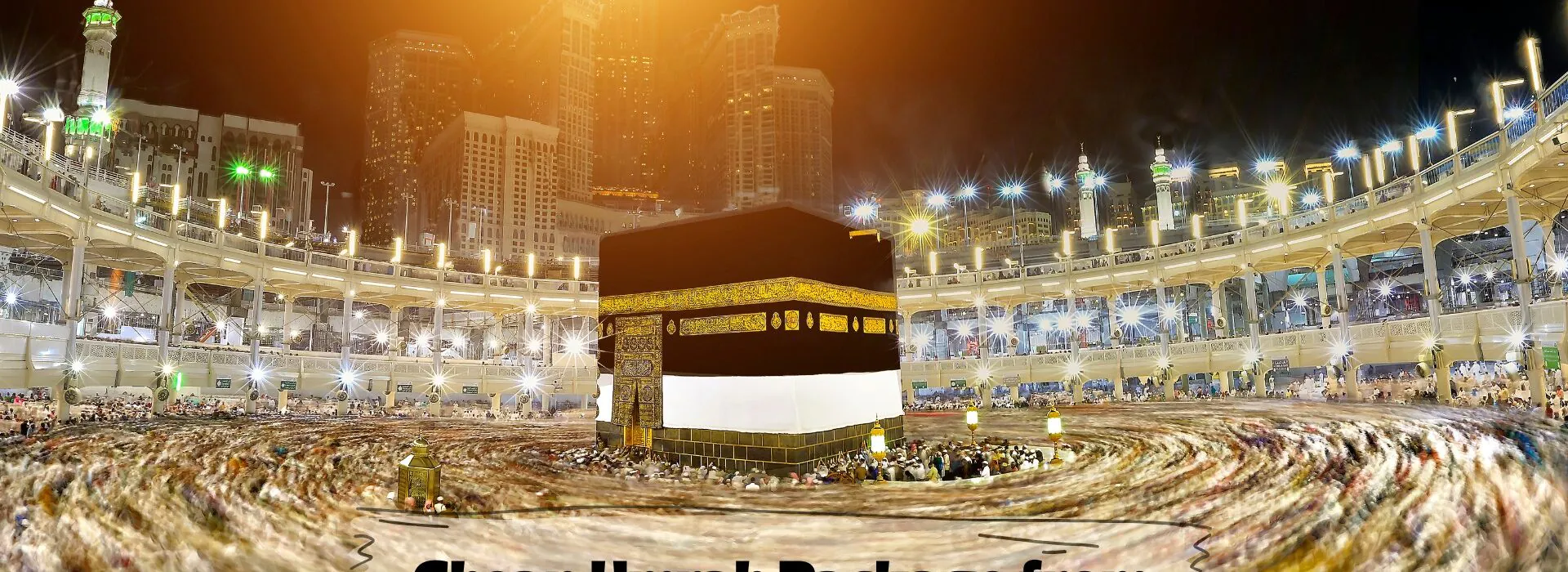
    The next step is to perform Tawaaf around the Holy Kabaa at this time, individuals should stop reciting Talbiyah. Tawaaf is circling around the Holy Kaaba seven times. Individuals should start Tawaaf from the Black Stone and also end seven circles at the same point. Black Stone is a sacred stone of Jannah, which has the highest spiritual value. Muslims must kiss Black Stone during Tawaaf, if they don’t find space to kiss the stone, they can also touch it.

    Muslims should start Tawaaf with their right footstep. It is mandatory for men to leave their right shoulder uncovered, this is called Idtibaa. To do so, Muslims need to keep the Ridaa downside below their right armpit. And completely cover the left shoulder with Ridaa. During the Tawaaf, individuals can recite different prayers and should also ask for forgiveness from Allah because it is said that prayers are accepted at that time.

    After the completion of all seven circles around Kaaba, pilgrims should go to Muqam e Ibrahim to offer Salat of Tawaf and then drink Zamzam water. The last step of Tawaaf is to go back again to Black Stone and kiss it.

    Saa’i between Safa and Marwah

    In this step, pilgrims should do Saa’i, which can be performed between the hills of Safa and Marwah. Pilgrims should have gone up on the Hill of Safah in search of the Holy Kaaba, and when they saw the Kaaba, they should have stood in the direction of the Kaaba and raised their hands up to Supplicate to Allah.

    In Hadith, it is narrated that the Holy Prophet (PBUH) recited this dua:

    “Laa ilaaha ill-Allah wahdahu laa shareeka lah, lahu’l-mulk, wa lahu’l-hamd, wa huwa ‘ala kulli shay’in qadeer. Laa ilaaha ill-Allah wahdah, anjaza wa’dah, wa nasara ‘abdah, wa hazamaa al-ahzaaba wahdah”

    (There is no god but Allah alone, with no partner or associate; His is the Dominion, all praise is due to Him, and He is able to do all things. There is no god but Allah alone; he fulfilled His promise, granted victory to His slave, and defeated the confederates alone).” (Sahih Muslim, 1218)

    This dua should be recited 3 times, after that, men pilgrims should run toward the two green lights until they reach the Marwah. Then, they should climb up on Marwah Hill and again recite dua and supplicate to Allah by facing the Holy Kaaba. This act should be repeated seven times.

    Cutting of Hair

    Lastly, the pilgrims should cut their hair at Mina. It is essential for men to shave their heads entirely, while it is prohibited for women to shave their complete heads. Women need to cut their hair only two inches or three. This act of Pilgrims represents that individuals are declaring a detachment from themselves and complete subjection and obedience to Allah.

    After performing all these steps, your Umrah will be completed. Now, you can also change your clothes without any restrictions. And can visit all the other sacred places of Makkah, and next, you should head Towards the great Masjid e Nabvi, which is situated in Madinah, to continue your spiritual journey.

    home-icon-silhouette remove-button bedroom taxi coffee-cup hotel visa inverted-commas