

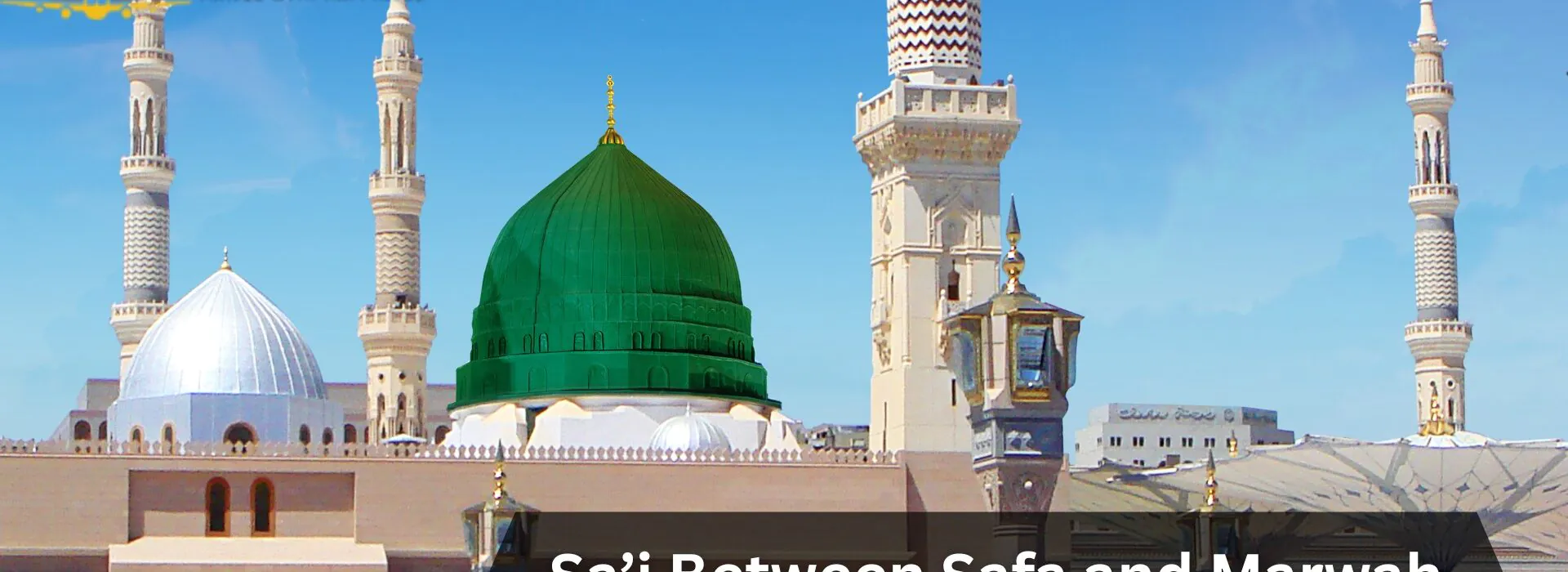
To millions of Muslims around the world, a trip to Mecca is a life long ambition and a spiritual cleansing process, a submission to the Creator. Regardless of whether one is doing Hajj or Umrah, the rituals done are not just physical gestures but profound, symbolic gestures, which bring the believer in touch with the rich history of the Prophets. These religious rituals include walking between two mountains, a ritual which symbolizes struggle, hope and final dependency on God.
The Saai between Safa and Marwah is a pillar of Hajj as well as Umrah. It is not only walking back and forward but it is also a replay of a desperate mother in search of water and heavenly grace. To pilgrims who purchase their religious pilgrimage at Crowne Travels, knowing about the depth of this ritual makes the pilgrimage more of a soul-sucking experience than merely a physical exercise.
The Historical Origins: A Mother’s Resilience
In order to fully realize the Sa’i, one has to turn thousands of years back to the time when Hajar (AS), the wife of Prophet Ibrahim (AS) and a mother of Prophet Ismail (AS) came into the picture. Through the order of God, Ibrahim abandoned his wife and baby son in the dry land known as Mecca that was barren and had no water at that time.
The infant Ismail started crying out of thirst when the supplies they had were exhausted. Devoid of hope and panic-stricken to rescue her child, Hajar had rushed to the closest hill, Safa hoping to find a caravan or some water. Without a vision, she went down the valley and ran up to the other hill, Marwah. She made this desperate search seven times. The trip is part of the Umrah Packages from New York and this proves the historical meaning of this religious practice.
At this time of complete helplessness and faith in Allah, the miracle took place. The Angel Jibreel hit the earth between the feet of the infant and the spring of Zamzam came out. The Sa’i is an ode to the unshaken faith of Hajar and her fighting (fight is the literal meaning of the word “Sa’i”) against the insurmountable odds.
Understanding the Ritual
The Sa’i is a process of going around the two hills 7 times. There is a total of 7 laps that are approximately 3.15 kilometers (approximately 1.96 miles). Although it is a physically demanding aspect of the pilgrimage, the modern Mas’a (the walkway) is covered with walls, air-conditioned and paved with smooth marble and the pilgrimage is now much easier than it used to be in the Hajarlastan times.
The ceremony is performed following the completing of Tawaf (circumambulation of the Kaaba) and the two rak’ats of prayer at the Station of Ibrahim. This is a precondition to the completion of Umrah and Hajj without which this pilgrimage is not complete.
Step-by-Step Guide to Performing Sa’i
First-time pilgrims may find it difficult to overcome the throngs and recall the exact supplications to be said. Below is a description of the procedure of the ritual.
Preparation and Intention (Niyyah)
Although performing Wudu (ablution) is not absolutely compulsory to Sa’i like in the case of Tawaf, it is strongly advisable to be in a purified state. Go to the mountain of Safa. With as much as you can go near to the foot of the hill it is Sunnah to have the verse in the Quran which says:
As a matter of fact, Safa and Marwah are one of the Allah symbols. Anyone who comes to the House Hajj, or to Umrah then there is no evil that there is evil in walking in between. And good-volunteers are good – then surely, Allah is Appreciative, Knowing. (Surah Al-Baqarah, 2:158)
Starting at Safa
Raise the mountain of Safa and see as far as you can the Kaaba (this may vary because of the alterations in the construction). Face Qibla, and put hands in supplication and glorify Allah. The professing oneness of Allah and his sovereignty is one of the recitations. This is the stage when you can say any personal dua that you desire as long as you wish.
Walking Toward Marwah
Be the heir of Safa and start walking toward Marwah. Green fluorescent lights identifying a particular area of the path will be observed. This is the lowest spot in the valley where Hajar ran after her son as they traversed the ground on the low ground.
- For Men: It is Sunnah to jog or run at a moderate pace between these green lights.
- For Women: It is standard to walk at a normal pace throughout the entire distance.
Arrival at Marwah
One lap as soon as you arrive in Marwah. Turn thyself into the hill (or the location of the slope) and face the Qibla and mention the same praise and the supplication as thou had at Safa. This is the end of the first round, the beginning of the preparation of the second.
Completing the Seven Laps
Return toward Safa. The distance covered between Safa and Marwah is counted and the distance between Marwah and Safa is the second lap. You will make your seventh lap at Marwah.
Practical Tips for a Smooth Experience
We frequently recommend our clients to prepare physically and psychologically to this rite in Crowne Travels. The following are some of the clues of making sure that your Sa’i is done comfortably:
Timing Matters
The Mas’a is open 24 hours a day. The area may get very congested immediately after rigorous prayer periods. In the event that you are carrying out Umrah during a peak season, you should attempt to schedule your Sa’i at a time of the night or mid-noon when there are possibilities of the crowds becoming a little bit spread out.
Footwear
In contrast to the Tawaf, in which people prefer to walk barefoot on the chilly marble, the Sa’i is quite a long way. Blisters and foot pain can be prevented by wearing high-quality and supportive socks or special soft footgear that is used during pilgrimage.
Hydration
Physical activity such as walking through a crowd that has more than three kilometers can be dehydrating. Luckily, the Zamzam water dispensers are found all over the Mas’a. Take a drink, however, do not hinder the passage of other pilgrims.
Patience and Etiquette
You will have shoulder to shoulder contact with individuals of all parts of the world. Pushing and shoving goes against the ethos of the pilgrimage. Be patient, assist those who are aged in case you observe them to be in distress and keep your mind focused on your prayers.
Common Mistakes to Avoid
The experienced travelers may commit some mistakes because of fatigue or disorientation. Ones that can be used wisely are to be aware of the following traps:
Starting at Marwah
The count must begin at Safa. When you begin at Marwah, then that is not your first lap.
Miscounting Laps
Other pilgrims are of the opinion that a journey between Safa and Marwah is one lap. This is incorrect. One way is one lap.
Climbing Too High
There is no need to reach the top of the rocks at Safa or Marwah particularly when you feel unsafe or the place becomes crowded. It is only necessary to be standing at the bottom of the hill looking at the Kaaba.
Running the Whole Way
Running (men) Sunnah is only applicable between the green lights. The whole distance will wear you out within a short time and is not to be part of the ritual.
The Spiritual Takeaway
The Sa’i is a lesson in hope. Hajar was not waiting and hoping a miracle will happen to her; she used all she could to come up with a solution. She acted, she sought and she believed. It educates the Muslims that we should be left to take the consequence through Allah, but we have the duty to work hard.
It is equally a deep representation of equality. Royal and common folk, youthful and mature, follow the same path, have the same sweat, repeat the footsteps of a royal lady in the desert. It also relates the pilgrim to the plight of life and reminds the pilgrim that once every difficulty comes ease as the water of Zamzam flowed out following the agony of Hajar.
On the eve of your pilgrimage to Mecca, have at the back of your mind that the Sa’i Between Safa and Marwa is a bodily expression of forbearance and endurance. At Crowne Travels we are making sure that our clients are thoroughly prepared to these rites so that they can go ahead and fulfill their pilgrimage full of peace and spiritual focus.
Embark on Your Journey
The invitation to the purification of the soul and restoring your contact with the Divine is the pilgrimage. You are at the hill of Safa and you are looking across the sea of believers and you are adding to the tradition that has been there throughout the millennia.
The Hajj and the Umrah pilgrimages must be logistically and spiritually ready. Whether you are passing the visa procedure, you need the proximity of the Haram or you require information about the rituals, it counts to have a trusted travel mate. Take never leave the planning of your trip to derail your heart with details of your trip since Let Crowne Travels will handle all the details of your trip.